·
Understanding Light Colour Temperature: What Kelvin Really Means
Learn what Kelvin means in lighting, the difference between 2700K, 3000K, 4000K and 6500K, and how to choose the right colour temperature for your space.

When choosing lighting, most people focus on the style of the fitting. But one of the biggest factors influencing how a space looks and feels isn’t the light fitting at all—it’s the colour of the light it produces.
This is measured in Kelvin (K), a scale that describes the colour temperature of a light source. From warm, inviting tones to crisp, daylight-like illumination, selecting the right Kelvin can completely transform the atmosphere, functionality and appearance of a room.
At Cobinlight, one of the most common questions we receive is, “Which Kelvin should I choose?” Understanding the difference is the first step towards creating beautifully lit spaces.
What Is Kelvin?
Kelvin (K) is the measurement used to describe the colour temperature of light.
Contrary to what many people think, Kelvin does not measure brightness. Instead, it measures the appearance of the light itself.
Lower Kelvin values produce warmer, softer light with golden tones.
Higher Kelvin values create cooler, whiter light with a subtle blue appearance.
Choosing the correct colour temperature is just as important as selecting the right light fitting.
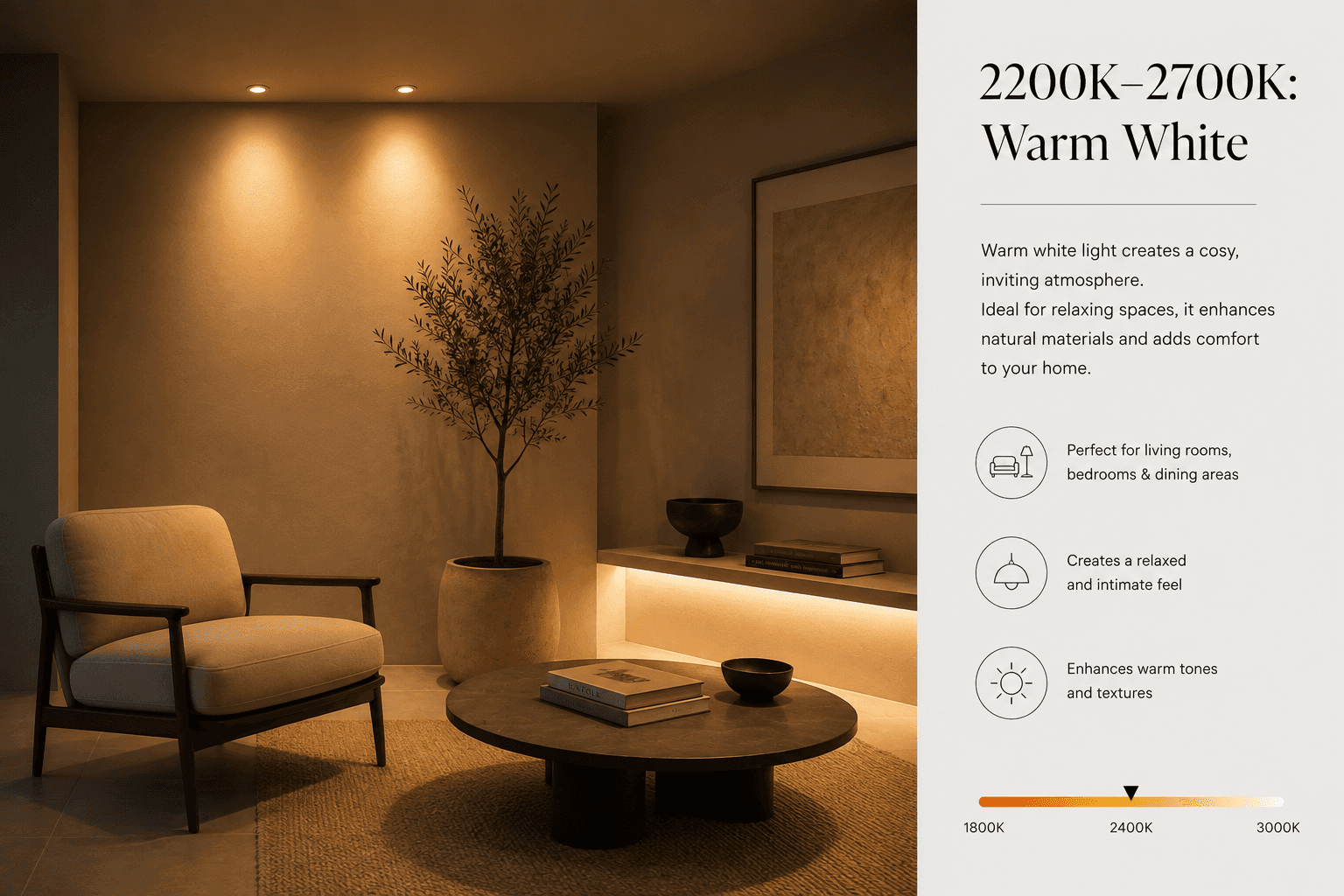
2200K–2700K: Warm White
Warm white lighting creates a soft, cosy and relaxing atmosphere.
Its gentle amber glow resembles candlelight or the warm light experienced during sunset, making it ideal for spaces where comfort and ambience are the priority.
Best suited for:
Living rooms
Bedrooms
Dining rooms
Boutique hotels
Restaurants
Decorative feature lighting
Warm white lighting also complements natural materials such as timber, stone and warm fabrics, adding richness and depth to interior finishes.
3000K: The Perfect Balance
If there is one colour temperature that works in almost every home, it is 3000K.
It provides a clean, warm white light that feels modern without becoming clinical. It has become one of the most popular choices among architects and interior designers because it balances comfort with excellent colour rendering.
Ideal applications include:
Kitchens
Bathrooms
Hallways
Open-plan living spaces
Residential architectural lighting
At Cobinlight, 3000K is often our preferred recommendation for luxury residential projects because it creates a sophisticated atmosphere while remaining practical for everyday living.

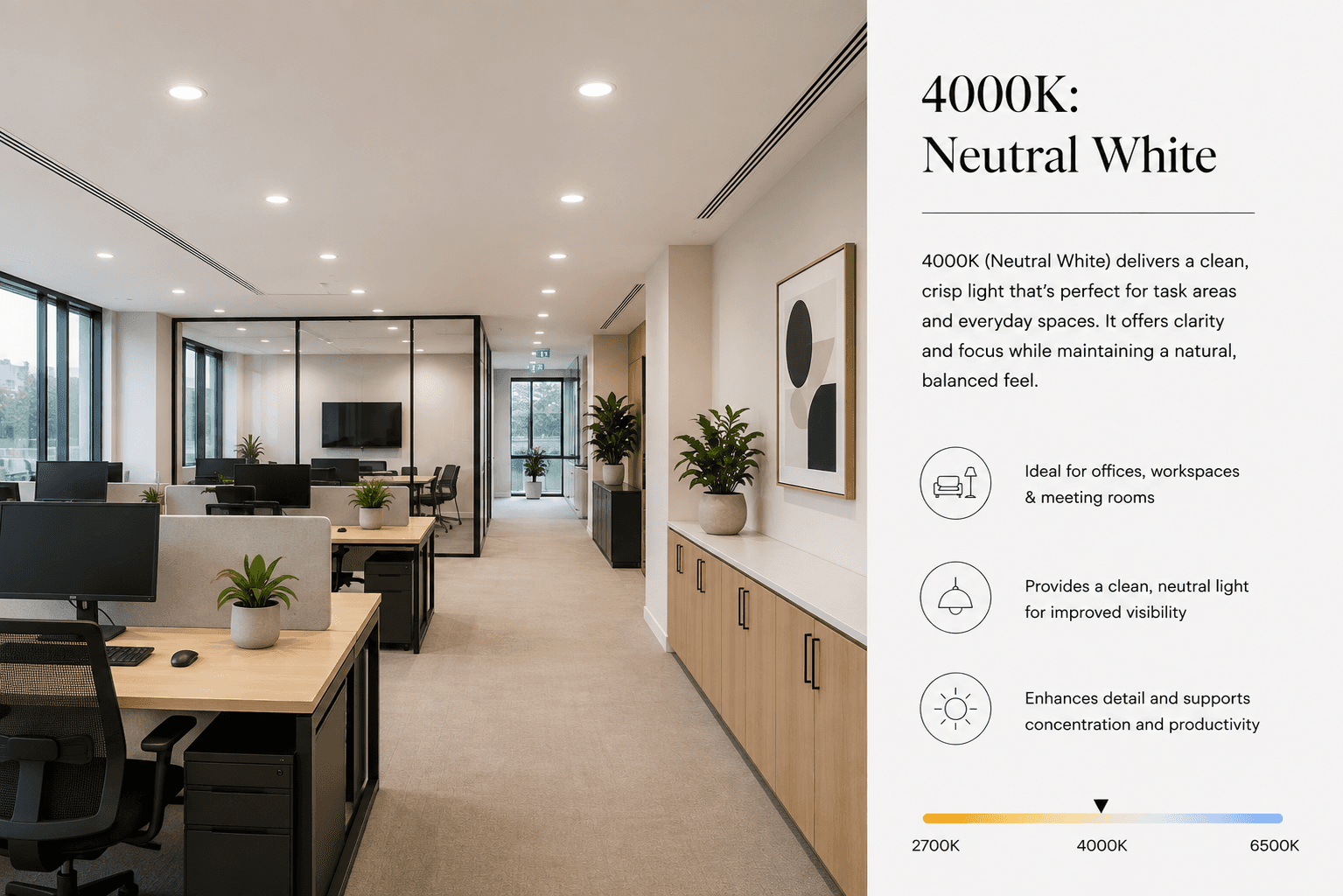
4000K: Neutral White
Neutral white lighting sits between warm residential lighting and cooler commercial lighting.
It produces a crisp, clean appearance without feeling overly harsh, making it particularly effective in spaces where visibility and functionality are important.
Common applications include:
Offices
Retail environments
Medical practices
Garages
Utility rooms
Modern workspaces
Many contemporary commercial developments choose 4000K because it provides a fresh, professional appearance while maintaining visual comfort.
5000K–6500K: Cool White and Daylight
As the Kelvin value increases, the light becomes noticeably cooler and brighter in appearance.
These colour temperatures closely resemble natural daylight and are commonly used where maximum visibility is required.
Typical applications include:
Warehouses
Industrial facilities
Workshops
Security lighting
Commercial kitchens
Outdoor task lighting
Although extremely effective for functional environments, these cooler temperatures can often feel sterile in residential settings if not carefully specified.

Which Kelvin Is Best for Your Home?
There is no single “best” colour temperature. The ideal choice depends on how each room is used.
As a general guide:
Bedrooms: 2700K
Living rooms: 2700K–3000K
Dining rooms: 2700K
Kitchens: 3000K
Bathrooms: 3000K
Home offices: 3000K–4000K
Garages: 4000K
Outdoor entertainment areas: 2700K–3000K
Security lighting: 4000K–5000K
Using different Kelvin temperatures throughout a home creates subtle transitions that support both relaxation and functionality.
Why Colour Temperature Matters
The right Kelvin doesn’t just change the colour of the light—it changes how you experience the entire space.
A warm living room feels inviting and comfortable.
A neutral kitchen feels clean and vibrant.
A cooler office improves concentration and visibility.
Even the finishes within a room are affected. Timber appears richer under warmer lighting, while white surfaces and modern materials often appear sharper under neutral or cooler light.
Getting the colour temperature right allows architecture, furniture and interior finishes to be appreciated exactly as the designer intended.
Common Mistakes to Avoid
One of the biggest mistakes homeowners make is mixing different colour temperatures within the same room.
For example, combining 3000K downlights with 6500K LED strip lighting can create an inconsistent and uncomfortable appearance.
Another common mistake is selecting lighting that is too cool for residential interiors. While daylight lighting may seem brighter in a showroom, it can make homes feel cold and uninviting.
Professional lighting design ensures consistency throughout a project, balancing aesthetics, functionality and comfort.
Expert Guidance from Cobinlight
Choosing the correct colour temperature is one of the most important decisions in any lighting project. While the right fitting provides style, the right Kelvin creates the atmosphere that makes a space truly memorable.
At Cobinlight, we work closely with architects, interior designers, developers and homeowners to specify lighting that not only looks exceptional but enhances the way people experience a space.
Whether you’re designing a luxury residence, a hospitality project or a commercial development, our team can help you select the ideal lighting solution for every environment.


